


Articles & Teachings
Survivor Resources

Self Care For Grievers: Allowing Love to Lead You Forward by Jackie Cole
In her book, It’s OK That You’re Not OK, Megan Devine presents an honest, direct discussion of both the pain of loss and the often grueling work of grief. Her tone is kind and supportive but she sugar-coats nothing, which is why I find her message of hope to resonate so truthfully. If my reflections on her writing speak to you, I encourage you to read or listen to her book. She is also featured in many interviews available on YouTube. Near the end of this book, Devine encourages grievers to put their trust in love. But rather than coming across trite or platitudinal, her words ring with authenticity. She suggests that only love can act as the bridge between the life we had and the life...
Blessings in Loss by Greg Eckerman
I’ve come to believe that even in our losses, we receive blessings. It isn’t always easy to recognize them, but I hope I can help you see what I mean. These blessings often connect to what we have come to know as the “ripple effects” of loss. When tragedy or trauma shatters our sense of meaning, we’re pushed to search for new sources of purpose. We’re also able to recognize that some of what we once prioritized no longer serves us. Losing our sense of purpose can open our hearts and minds to new forms of fulfillment. It may even give us the courage to revisit long-suppressed dreams, goals, or beliefs. The spiritual challenges that accompany loss can lead us to redefine what we believe...
Surviving the Holidays with Plan A and Plan B by Marianne Gouveia
The holidays can be beautiful… but they can also be brutal. For many of us at EricsHouse, this season carries extra weight. When you’ve lost someone you love, the twinkling lights can’t make things feel light. I know this personally. After losing my son Eric, the holidays changed. The world kept celebrating, but my heart was learning a new way to breathe. There were times when it took every ounce of energy to face the space where Eric would be if he were alive. But at the same time, the holidays have become a special time for me to feel grateful, to feel immense love for those I love, and to remember the beauty of having all of my children in my life – Robert, Joey, AND Eric. Over the...

Self Care for Grievers – Setting Boundaries by Jackie Cole
When we lose someone we love to suicide or substance use, the world cracks open in ways we could never have imagined or understood. In the months following my son’s death, everything felt raw and exposed. Certainly my heart was fractured and gone were joyous memories and confidence in my ability to navigate the world. Many friends and family members sincerely wanted to help… and they did. But some others’ behaviors, words and questions left me feeling even more fragile. Anyone walking through grief of this intensity and enormity needs to find space to breathe, feel and mourn. As I learned, finding that time and space required me to set boundaries. Setting boundaries is not selfish,...

Holiday Grief by Marianne Gouveia
The holidays are often described as “the most wonderful time of the year.” Our culture tells us this is a season of joy — a time for celebration, gathering, and giving thanks. And that is true. But for those of us who are grieving, the holidays can feel anything but wonderful. They can magnify the ache of absence, the longing for what once was, and the painful reminder that someone we love is no longer here. The world keeps moving, brightly lit and bustling with cheer, while our hearts quietly carry the weight of loss. The empty chair at the table. The unopened stocking. The silence where laughter once rang. These reminders can take our breath away. Yet even in the midst of deep sorrow,...

Grieving Suicide Amid the Ripple Effect of Stigma by Matthew Burg
Losing someone to suicide is an intensely isolating and painful experience. One that is often compounded by the pervasive stigma and misconceptions that surround it. This stigma often goes unrecognized and misunderstood. The immediate aftermath of a suicide loss unleashes a tidal wave of emotions: shock, disbelief, sorrow, anger, guilt, and an overwhelming barrage of "what if" questions. While these feelings are universal to grief, those mourning a loss due to self-harm face an added layer of distress. Our grief-avoidant culture, uncomfortable with suicide, often responds with silence, judgment, or well-intentioned but often hurtful platitudes. One of the most damaging aspects for...

Self-Care For Grievers: The Work of Love by Jackie Cole
When we lose someone we love to suicide or substance use, it can feel as though the ground has been pulled out from beneath us. Many of us are left feeling unmoored — unsure of how to move forward, or if we even can. The shock can be overwhelming. The questions that circle in our minds — the endless whys — can be exhausting, offering no comfort or clarity. And just when we feel least equipped to handle anything, we’re faced with the truth that grief, especially this kind of grief, takes real work. Therapist Marty Tousley puts it plainly: “It’s called grief work because finding your way through grief is hard work. If you put it off, like a messy chore, it just sits there and waits for you.”...

Supportive Actions That Meant the Most to Me by Janelle Cole
Recently, while reflecting on what helped me most on my grief journey, I came to a sudden realization: that I was thinking in the past tense, while living very much in the present one. This journey is ongoing and will never truly end, and therefore what helped me most at one time may not help me now, or I may discover something else supportive in the future. I find that sentiment extremely hopeful. I am filled with gratitude as I realize that I have innumerable little stories of people stepping up in ways that surprised me, honored me, and lightened my grief load for a moment. Support was found in actions and people like the local business giving me a nice pair of shoes to wear to my...

Self-Care for Grievers: Allowing Pain While Avoiding Suffering by Jackie Cole
Recently I have been re-reading Megan Devine’s book, It’s OK That You’re Not OK. As is often the case when I return to a book or podcast, I find that something always seems to land a little differently with me. This time, what really stood out was Devine’s discussion of pain versus suffering. She writes (and we all know this to be true) that pain is not optional. Losing your loved one will always hurt…our pain is proof that the bond continues to exist even in their absence. Suffering, however, is something different. Suffering comes from all of the extra layers - our own self-judgements, the “what ifs” and “should haves”, the expectation (either from ourselves or others) that we should be...
How to Get Involved During Suicide Prevention and Awareness Month by Marianne Gouveia
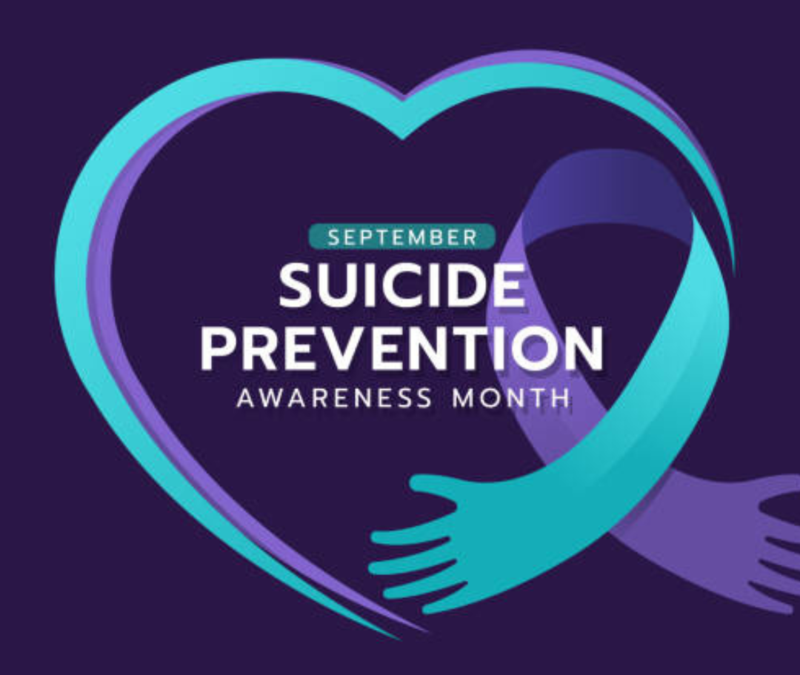
September is Suicide Prevention and Awareness Month During September, we take the time to pause and remember the lives lost to suicide, to support those who are struggling, and to remind each other that hope is always possible. For me, this month carries deep personal meaning. I lost my son, Eric, to suicide in 2016. In the wake of that devastating loss, my life changed forever. Out of that heartbreak, I founded EricsHouse to support families navigating the complex grief of losing someone to suicide or substance use. This month is about more than remembering lives lost—it’s about taking action together. Suicide prevention begins with awareness, and each of us can play a part. Why Awareness...

The Story by Greg Eckerman
Our stories are at the heart of our grief journeys – the stories of our loss, the stories of our love, the bitter-sweet stories of our sadness and remembrance. We tell the stories again and again. They evolve as we do. Healing comes so slowly, in such small increments, that the evolution of our stories can be a valuable benchmark for where we are in the process of defining who we are becoming and what matters in life after our loss. Remember the first time you told your story to someone who didn’t know – or someone you didn’t know? It was likely terrifying . . . and cathartic. Early on the stories tend to focus on how they died. They give voice to the often complex, conflicting,...

When Summer Hurts: Grief in a Season of Light by Marianne Gouveia
Here we are in the midst of summertime. The days are long, the sun is shining, and there is a strong desire to enjoy the long days and the chance to take a much-needed vacation. Even though in Phoenix, the weather is so terribly hot, we still see families packing for vacations, friends gathering around pools and patios, and social media lighting up with smiling faces and summer adventures. But what happens when your world has been turned upside down by loss? For those of us who are grieving, especially after a traumatic loss like suicide or substance mis-use, summer doesn’t always feel like a season of joy. In fact, the brightness of it all can feel unbearable. It’s not just the absence...

Self-Care for Grievers: Cultivating Patience for Yourself by Jackie Cole
Butterflies have long been associated with loss and sightings are often seen as signs that loved ones remain nearby. When we think of a butterfly, we picture beauty, flight and freedom. But before any of that is possible, there’s a long, hidden process that takes place inside a chrysalis. What people may not realize is that the caterpillar inside doesn’t simply sprout wings, develop a segmented body then emerge ready to fly away. What actually happens is so much more fascinating and awe-inspiring…the caterpillar inside the chrysalis actually dissolves into a kind of organic soup. While the major biological systems remain intact and are rearranged to suit the developing butterfly, the rest...

Prevention – Intervention – Postvention – Prevention By Greg Eckerman
Those of us who have supported someone we care about through mental health or addiction struggles understand the transition from prevention strategies to intervention. If only we could make them see – where this could lead, how deeply they are cared for . . . how much could be possible if they could conquer their demons. Sometimes those strategies fail and we lose them. Then we’re left with our own struggles to survive. When we find support and companions in our grief we call that postvention. We find those willing to walk beside us on this overwhelming, sad, tragic journey. We take those first, stumbling steps . . . and then we keep going in spite of our doubts and deep sadness. Some...

Why Grief After Suicide or Overdose Hurts So Much By Marianne Gouveia
After my son Eric died by suicide, I entered a world I didn’t know existed—a world filled with sorrow, silence, and stigma. I quickly learned that grief after suicide or overdose is different. It’s not just about missing the person you love; it’s about carrying the weight of trauma, guilt, unanswered questions, despair, and the fear that others will never truly understand. However, I also learned something else: Support after these losses is life-saving, and we now understand that Postvention is Prevention. Those of you who work with EricsHouse know the power of being with people who have a similar loss experience. WHY THIS GRIEF IS SO HARD When we lose someone to suicide or overdose,...

Self-Care For Grievers: Cultivating Peace By Jackie Cole
Peace might feel like an impossible word when your heart has been shattered by the loss of someone you love…especially when that loss comes through suicide or substance use. Peace can seem like something that other people get to feel…something out of reach when the questions are endless and the pain is so personal. But peace, in this kind of grief, doesn’t mean everything is okay or that the loss makes sense. It means learning to be with what is true, without needing to push it away or pretend we’re fine. The word ‘cultivation’ implies giving attention, effort and patience to something worthy. Looking back to life before my son’s death, it seems as if happiness, joy, peace and laughter...

Living Forward by Greg Eckerman
Soren Kierkegaard, a Danish philosopher, said: “Life can only be understood backwards; but it must be lived forwards.” I find insights into many people’s grief journeys, including my own, in this declaration. From the moment it starts, that pivotal moment where we learn with absolute certainty that our lives will never be the same again, we begin moving backwards to find understanding. What happened? How could that have happened? Why did it happen? I think it is common to start out with a focus on how they died in a futile effort to make sense of what can’t be comprehended. But if we find the support to learn to mourn in communion and connection with companions on this journey, we...
Self-Care for Grievers: Cultivating Hope by Jackie Cole
In the aftermath of losing a loved one to suicide or overdose, the weight of our grief can feel unbearable. We may long for hope and reassurance that healing can occur even as we doubt that such a future exists. Indeed, hope isn’t a feeling we can conjure or grasp hold of.. Nor can we flip a switch to turn it on in order to light the darkness of our grief. Hope, instead, is an outlook or view that begins to take shape over time, as we tend to our pain and give ourselves permission to heal. The early days, months and even years after a sudden, traumatic loss are often filled with simple survival - just getting through one minute, hour or day at a time. In such moments, the idea of hope may...

Tending to Your Emotions After Loss: A Gentle Practice of Awareness, Acceptance, and Compassion by Marianne Gouveia
Grief can bring forward a storm of emotions—some so intense they feel impossible to name, others so subtle they go unnoticed until they rise unexpectedly. In our culture, where we are often taught to stay strong and keep going, many of us haven’t learned how to sit with difficult feelings. But emotional pain isn’t something we can think our way out of—it’s something we must feel our way through. Rather than pushing our grief aside or trying to control it, we can take a more compassionate approach by practicing three powerful steps: Notice. Name. Nurture. 1. Notice – Tune in with curiosity Take a quiet moment to check in with your body and heart. Where is tension showing up? What are you...

Simple Connection by Greg Eckerman
We focus so much of what we do in EricsHouse on the concept of companioning that sometimes I think we underestimate its importance because of its simplicity. I believe companioning boils down to three basic declarations to one another: I see you I hear you I am with you ‘I see you’ is a common greeting in many cultures. It’s such a simple statement, with deep connotations: I see your pain, I see you as you are, I see you struggling to survive. As a greeting it implies acceptance, awareness, and acknowledgement of a person’s worth. ‘I hear you’ is at the center of all we do. It is why our practice of active listening skills is so important. It is a fundamental validation of another’s grief:...
Self-Care for Grievers: Attending to the specific pain of your loss to suicide or substance use by Jackie Cole
Grieving and mourning a loss to suicide or substance overdose carries a unique kind of weight. As a member of the EricsHouse Community, you are aware that these losses come with complex and uncomfortable emotions such as guilt, anger, shame, and isolation from others who don’t understand. As such, self-care for this kind of grief needs to be especially nonjudgemental and kind. Many people find that creating a physical or tangible outlet for their emotions leads to spiritual, somatic and emotional healing. With that in mind, I’m hoping that you’ll be inspired by the ideas presented here. As always, you should feel free to experiment in order to develop a personalized self-care practice...

Your Present by Greg Eckerman
For many of us, the holidays embody the past, present and future. In grief, we are drawn into the past – family connections, shared meals, and, I hope, the joys of the season. Times with our departed loved ones – when we were younger, less shaped by the world, closer to our divine spark selves. Even if we have to go all the way back to early childhood to get to that kind of purity, our stories of the holidays may be the richest, funniest, most heart-filled remembrances of our loved ones. There’s nothing at all wrong with remembering past holidays, we must say hello on the way to goodbye. As loss survivors, we also talk about our grief journeys a lot, trying to figure out what healing,...

Navigating Grief During the Holidays by Marianne Gouveia
The holidays are tough for those of us who are grieving the loss of someone dear to us. We learn from our clients at EricsHouse that each person experiences loss in their own unique way. While over time, we learn to integrate our loss in authentic and healthy ways, we also understand that our grief remains an integral part of our life experiences. Over time, as we begin to heal, we also know that grief is wildly different during the holiday season. This season can be very challenging when the last thing we feel like doing is celebrating a new season. Our holiday support group suggests considering your “Plan A” and “Plan B.” This includes reflecting upon your holiday values. Think about...

The Importance of Hope by Alan D. Wolfelt, Ph.D.
“Today… I open my heart’s hand to allow… the touch of hope.” — Julia Cameron Someone you love has died. In your heart you have come to know your deepest pain. Your grief has brought challenges that seem beyond your own capacity to survive. Grief creates chaos, and your soul cries out. You naturally experience a sense of helplessness and, at times, you feel the depths of hopelessness. It all feels so incredibly overwhelming. And as you live in this painful place, you come to learn that you must surrender to your grief, sit in your wound, and make space for your lost self. If your experience is in any way like my own and those of the thousands of mourners I have had the honor to walk with...

Nurturing Your Soul by Jackie Cole
Self Care: taking action to preserve one’s own physical, mental, emotional and spiritual health, especially during periods of stress All of us in the EricsHouse community understand that the unexpected loss of a spouse, child, sibling or other cherished person tears holes in our hearts and souls. All that once seemed solid and predictable - our belief systems, our values, our certainty in the present and our plans for the future - now appear groundless and meaningless. Dr. Alan Wolfelt refers to this upheaval as the ‘wilderness of grief’. Early grief, in particular, can be extremely tumultuous and chaotic. In addition to having to process the traumatic loss of a loved one in the present,...

North to Alaska by Greg Eckerman
We just got back from a cruise/land tour in Alaska. It was incredible. Marianne and I took our middle son, Joey (many of you have met Joey – for those who haven’t, Joey is a really special guy, and we are blessed to have him live with us). Joey’s best friend, Timmy, and his family were with us on the cruise which made it even more wonderful. Alaska is overwhelming. The glaciers and endless mountains, the whales and bald eagles, and the vast expanses of nature’s beauty are mostly free of human influence. Grandeur is everywhere. It is truly humbling. But I was also struck by smaller things on this trip – especially watching Joey and Timmy connect with so many people. Joey is really social –...

Fentanyl Awareness – Is There Hope? by Marianne Gouveia
I usually go to mass on Sunday mornings at one of my favorite churches. This Sunday, however, I was stuck at home with COVID. My family (Greg, Jojo, and I) just returned from the most fantastic vacation we’ve ever had—a cruise to the last untouched frontier, Alaska. We all returned with varying degrees of COVID. I wanted to write about fentanyl today. I have been tracking the statistics over the years, but an email came through my phone this morning that surprised me. More than 81,000 people have died in 2023 due to synthetic opioid overdose. Almost 75,000 of those were due to illicit fentanyl. I learned that Alaska has had a 46% increase in fentanyl deaths between March 2023 and March...

Reflections for National Grief Awareness Day by Marianne Gouveia
August 30th is National Grief Awareness Day. This day focuses on awareness of grief, which can be a complex and unpredictable experience that affects people differently. Likewise, there are different ideas about how we each move through our grief, about how we mourn our losses, and how we stay healthy and whole despite losing someone dear to us. And many different cultures and practices help millions of people authentically mourn. I thought I would share a bit about my background and my thoughts about how we, in Western culture, view and respond to losses in our lives. You might guess from the name “Gouveia” that I am Portuguese, our name coming from a city in Portugal called “Gouveia.”...

Shared Survival by Greg Eckerman
What does it mean to survive the loss of someone to suicide or substance? It’s got to be more than continued breathing… more than just not dying ourselves. At EricsHouse, we believe that the grief journey is not something that should or, even, can be done alone. It requires community. That’s really what’s at the heart of EricsHouse – building connections and community to enable mutual healing. We start with our individual support and build on it in our groups. And we survive together and learn what survival means for each of us along the way. There’s no set process for this, we each embark on a personal journey of exploration and discovery. Early on, it’s all we can do to encounter our...

The Need to Grieve by Greg Eckerman
From earliest childhood we learn to avoid pain. As we grow, we engage in the natural instinct to block pain and suffering – especially in the West, where we learn to seek rational structures for our emotions and control them. But grief after traumatic loss can’t be avoided, nor is it rational. We have no idea what to do with our pain, or even how to hurt. If we look to the wisdom traditions of the East, we see that grief isn’t something to run from – it is the uncharted territory we need to explore. As Alan Wolfelt has taught us, “grief lives in liminal space.” Liminal space is betwixt and between. Grief takes us there, sadness lives there. Grief has something important to teach us...
